
Machine learning in factor investing: can ai predict excess returns?
Keywords:
Machine learning, factor investing, excess returns, alpha, artificial intelligence, financial forecasting, non-linear models, neural networks, interpretability, overfittingAbstract
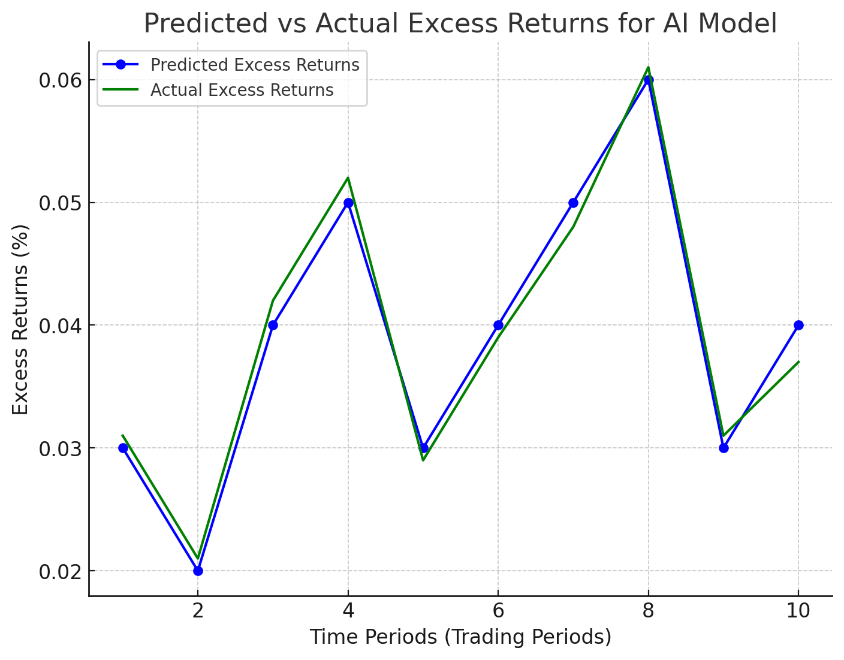
Factor investing has revolutionized asset allocation, yet its reliance on traditional, often linear, models may leave alpha on the table. This paper explores the potential of machine learning (ML) to enhance factor investing by predicting excess returns. We review the limitations of traditional factor models and delve into the theoretical underpinnings of ML for excess return prediction. We then analyse empirical evidence, contrasting the performance of ML models with conventional approaches. We find that ML, particularly non-linear models like neural networks, can outperform linear models in capturing complex relationships and generating alpha. However, challenges remain, including data overfitting, interpretability, and dynamic market adaptation. We conclude by outlining promising avenues for future research and discussing the ethical implications of AI-driven factor investing.
Downloads
Downloads
Published
Issue
Section
License
Copyright (c) 2017 Dr. Nida Usman (Author)

This work is licensed under a Creative Commons Attribution 4.0 International License.
All articles in the Journal of Applied Finance and Economic Policy are published under the Creative Commons Attribution 4.0 (CC BY 4.0) license. Users may share, distribute, and adapt the content for any purpose, including commercial use, provided proper credit is given to the authors and the journal.